
NYC Homeowner’s Guide to Backyard ADUs (2026)
The NYC Homeowner’s Guide to Detached Backyard ADUs
If you own a one- or two-family home in New York City, the zoning rules that govern your backyard changed fundamentally in late 2024. The City of Yes for Housing Opportunity reform, adopted by the City Council on December 5, 2024, made it legal to build a freestanding residential unit in the rear yard of an existing home. Applications opened through the Department of Buildings in December 2025, and homeowners across all five boroughs are now filing plans.
This is not a pilot program or a variance. It is an as-of-right zoning change that applies citywide. If your property qualifies, you can add a self-contained home to your lot with its own entrance, kitchen, and bathroom, without a community board hearing or Board of Standards and Appeals approval.
This guide is the starting point. It covers what a detached backyard ADU is, who qualifies, the key rules, what the process looks like, design and financing considerations, and a realistic timeline. Each section links to a deeper article where we break down the details. If you want the full picture, start here.
In this guide:
What it is • Who qualifies • Key rules • The process • Design • Financing • Timeline • Is it right for you?
What Is a Detached Backyard ADU?
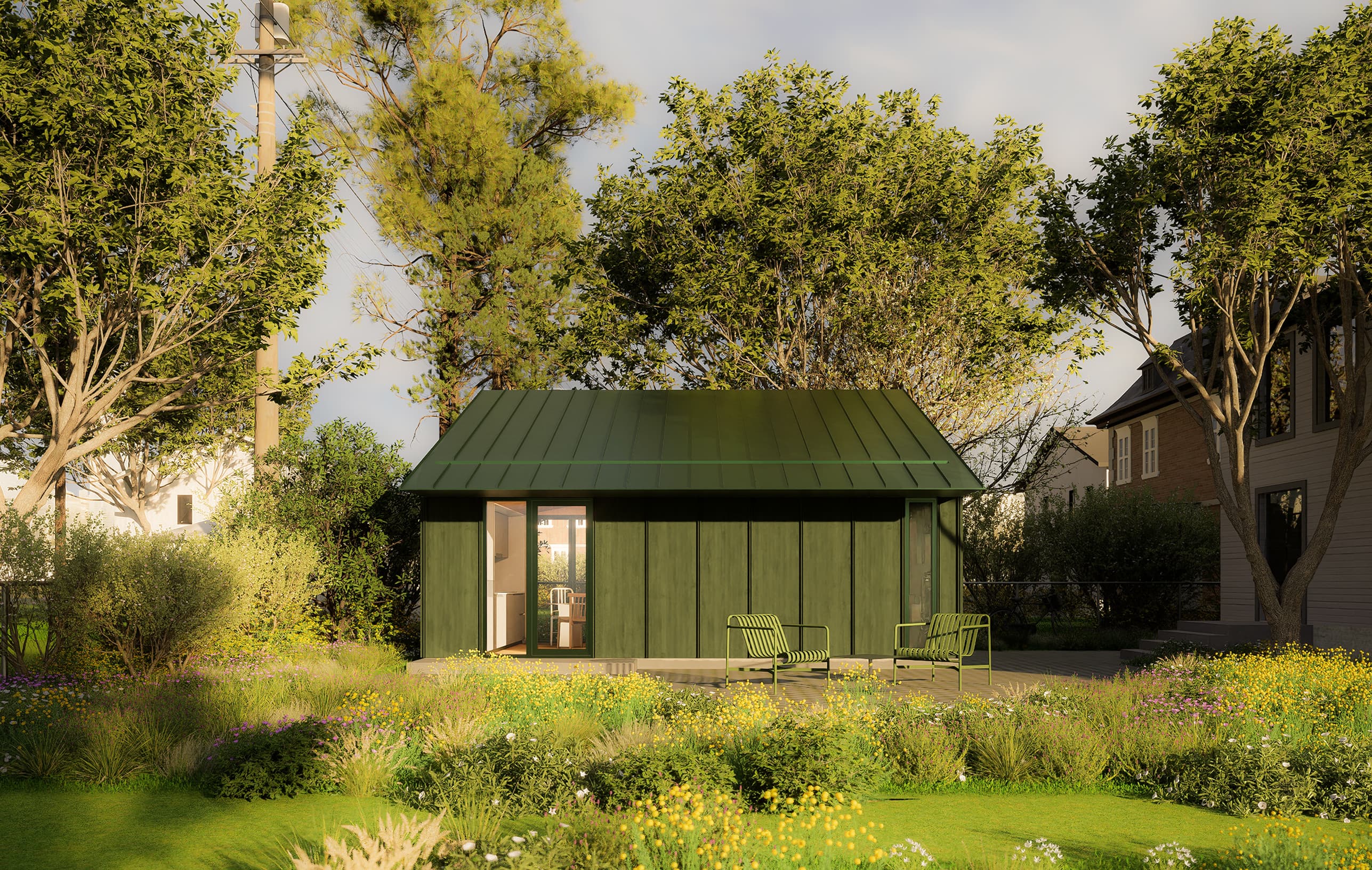
A detached backyard ADU is a self-contained residential unit built as a separate, freestanding structure in the rear yard of an existing one- or two-family home. The NYC Department of Buildings calls it an Ancillary Dwelling Unit. Most people just say ADU.
What makes it “detached” is that it stands alone. It is not connected to the main house, not built inside an existing structure, and not shared through a common wall. It has its own entrance, typically accessed from the backyard or through a side gate, and it functions as a complete home: a full kitchen, a bathroom, a living area, and usually one bedroom.
This guide focuses specifically on detached rear yard structures — sometimes called backyard cottages or granny flats — as opposed to basement conversions, garage conversions attached to the main house, or internal ADUs. The detached configuration offers a level of privacy and independence for both the homeowner and the occupant that other ADU types cannot match.
Who Can Build One?
The rules establish four baseline eligibility conditions. Your property must be a one- or two-family home. You must live on the property at the time of application. You can only build one ADU per lot. And your property must be in an eligible zoning district, which covers most low-density residential zones (R1 through R5) across the five boroughs.
Beyond these four conditions, there are additional restrictions based on flood zones, historic districts, and certain low-density zoning designations outside the Greater Transit Zone. Whether a new detached structure is allowed on your specific lot depends on how all of these factors interact. Haven’s free eligibility tool at eligibility.havenadus.com checks all of them automatically and gives you a downloadable report with a preliminary site plan.
Read the full breakdown:
City of Yes and Your Backyard: What NYC’s New ADU Rules Mean for Detached Units — covers every eligibility condition, zoning restriction, flood zone rule, and historic district exception in detail.
Size, Placement, and Coverage: The Key Numbers
The maximum total floor area is 800 square feet, though most NYC backyards will not reach that maximum in practice. The ADU’s footprint cannot cover more than one-third of your required rear yard. Setbacks of at least 5 feet from side and rear lot lines are required, along with 10 feet of separation from the main house. Height is capped at 15 feet for a single story, or 25 feet if the ADU includes a garage or parking space on the ground level below.
The structure must have its own separate entrance, and a side yard at least 5 feet wide with direct street access is required. One of the most significant changes under City of Yes: you are not required to add a parking space when building an ADU.
The Process: How Haven Gets You from Idea to Move-In
Building a backyard ADU involves multiple city agencies, permits, and technical requirements. Haven handles the process end-to-end. It starts with a free eligibility check at eligibility.havenadus.com, followed by a consultation at havenadus.com/getstarted where we review your report and outline a realistic path forward. From there, Haven coordinates everything: the property survey, design (either a pre-approved plan or a fully custom design with a licensed architect), DOB permit filing, and construction administration with a contractor from our pre-vetted list.
During construction, Haven makes regular site visits to monitor progress and ensure the builder is following the design and specifications. A NYC building inspector conducts the final inspection to confirm the ADU is safe and ready for occupancy.
Read the full breakdown:
Our City of Yes rules post includes a detailed step-by-step walkthrough of how Haven manages the entire process on your behalf.
Design Considerations for Detached Backyard ADUs
A backyard ADU is a second home, and the design decisions you make upfront determine how well it works for both you and whoever lives in it.
Access. How does someone get to the ADU? The best scenario is a path from the street through a side gate or dedicated walkway that allows the occupant to come and go without passing through the main house’s outdoor space. This level of separation makes the unit feel like its own place, which matters for both livability and rental appeal.
Natural light. Rear yard structures can feel dark if windows face only neighboring fences. Orient glazing upward and toward the sky: skylights, clerestory windows, and south-facing glass all help. A well-lit ADU is a better home and a more attractive rental.
Utility connections. Electrical, plumbing, and gas run from the main house to the ADU through trenches in the yard. Where those trenches run affects where you can put pathways, plantings, and paved areas. Plan the utilities and the landscape together, not sequentially.
Financing Your Backyard ADU
The city’s flagship financing tool is the Plus One ADU Program, administered by HPD. It offers loans at rates as low as 0%, with terms up to 15 years (extendable to 30), for eligible homeowners who occupy their homes and are current on their mortgage and municipal payments. Forgivable loan options are available for homeowners who agree to rent restrictions. For homeowners who do not qualify for city programs, or who want to move faster, home equity loans, HELOCs, and construction loans are the most common private financing routes.
Read the full breakdown:
Our City of Yes rules post covers the Plus One ADU Program eligibility, loan terms, income limits, and conventional financing options in detail.
How Long Does It Take to Build a Backyard ADU in NYC?
Building a backyard ADU takes time. Being realistic from the start prevents frustration and helps you plan effectively.
Feasibility and eligibility: up to 1 month. This is where you confirm your property qualifies and understand the constraints.
Design and engineering: 1 to 4 months. This includes site assessment, plan development (or selecting a pre-approved design), and preparation for permit filing.
Permitting: 4 to 8 months. DOB review timelines vary. Projects using pre-approved plans from the Pre-Approved Plan Library move faster because the structural and code compliance review has already been done at the design level.
Construction: 6 to 12 months, depending on the size and complexity of the structure.
Final inspections: up to 1 month.
Total, from decision to move-in: plan for 12 to 18 months. Projects using pre-approved plans tend to land at the shorter end of the permitting range. The practical takeaway: start now. The sooner you begin, the sooner you know what your project will actually involve.
Is a Backyard ADU Right for Your Property?
Every lot is different. A few factors make a project more straightforward: a lot depth of 100 feet or more, a rear yard with good dimensions, access through a side yard or rear street, and no flood zone designation. Single-family homes with a clear owner-occupancy situation are the simplest cases.
More complex situations — a narrow lot, a two-family home, a property at the edge of a flood zone — do not disqualify you. They just mean the design and permitting process requires more careful thought upfront. This is why checking your eligibility before you invest in design is worth doing first.
Explore specific scenarios:
We’re publishing a series of case studies that walk through realistic ADU projects by borough and lot type, including narrow lots in Queens, two-family properties in Brooklyn, flood zone builds in the Rockaways, and more. Check back at havenadus.com/nyc-resources for new posts.
Frequently Asked Questions About Backyard ADUs in NYC
Can I build a backyard ADU in NYC?
Yes. Since December 2024, the City of Yes for Housing Opportunity reform allows owners of one- and two-family homes to build a detached ADU in their rear yard as-of-right — no variance or community board approval required. Applications opened through DOB NOW: Build in December 2025. Check your specific eligibility at eligibility.havenadus.com.
What is a backyard cottage or granny flat in NYC?
These are everyday terms for what New York City officially calls an Ancillary Dwelling Unit (ADU). A backyard cottage, granny flat, or in-law suite built as a freestanding structure in the rear yard of a one- or two-family home is classified as a detached ADU under the City of Yes zoning rules.
How long does it take to build a backyard ADU in NYC?
Plan for 12 to 18 months from decision to move-in. That includes up to 1 month for feasibility, 1 to 4 months for design, 4 to 8 months for permitting, 6 to 12 months for construction, and up to 1 month for final inspections. Projects using pre-approved plans from the PAPL tend to move faster through permitting.
Does a backyard ADU increase my property value in NYC?
Permitted ADUs generally increase property value because they add legal, rentable living space to your lot. The extent of the increase depends on the borough, the neighborhood rental market, and the quality of the build. Because City of Yes is still new, NYC-specific comparable sales data is limited, but nationally, legal ADUs have been shown to add 15 to 35 percent to home value.
Ready to Find Out What’s Possible on Your Property?
Start with Haven’s free eligibility tool at eligibility.havenadus.com. You’ll get a detailed report covering your zoning district, flood zone status, historic district designation, and available yard space, along with a preliminary site plan showing where a detached ADU could fit on your lot.
Take the next step
If your property qualifies, schedule a free consultation at havenadus.com/getstarted. We’ll review your report together, answer your questions, and outline a realistic path forward for your specific property. No pressure, no obligation.