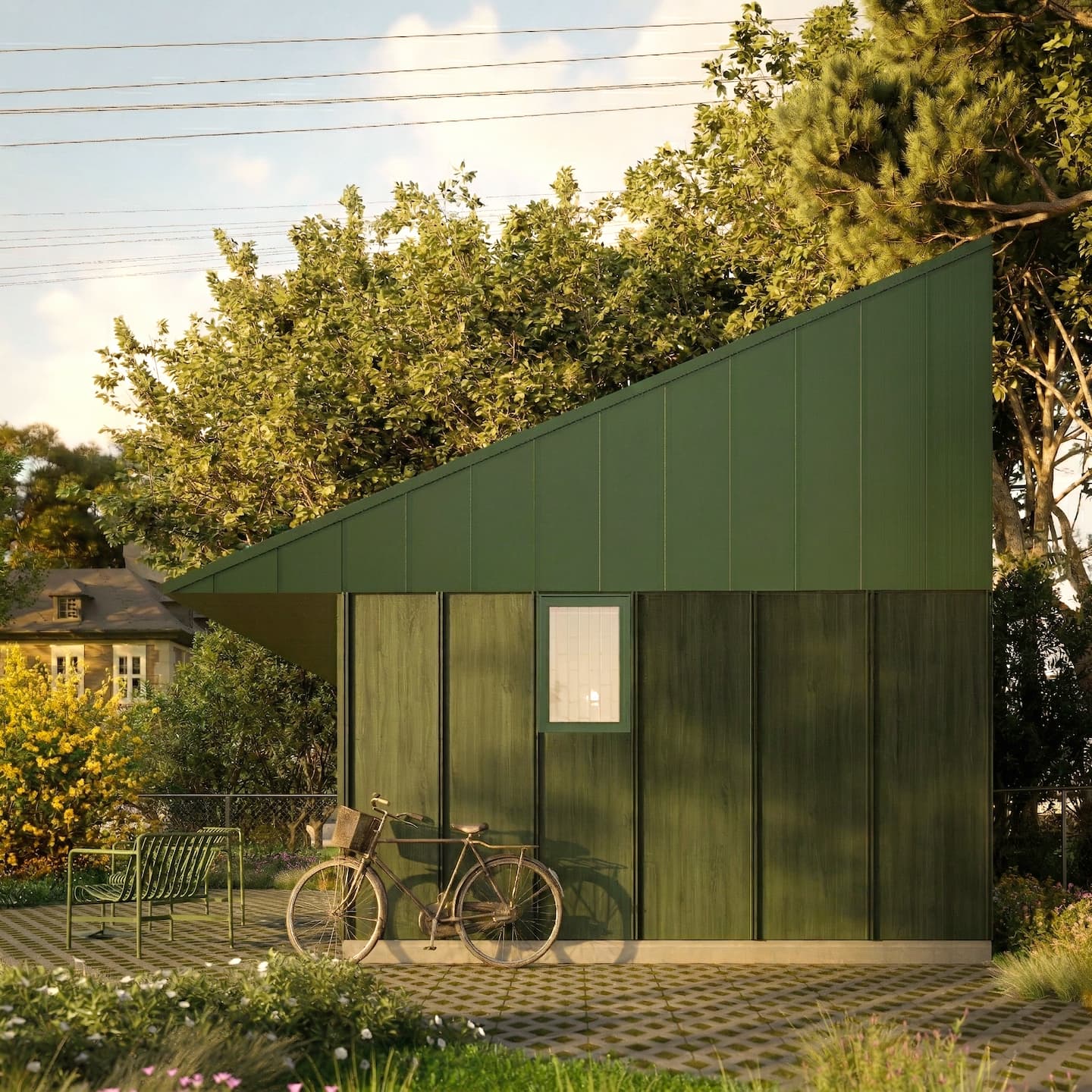

City of Yes ADU Rules for NYC Backyard Units
City of Yes and Your Backyard: What NYC’s New ADU Rules Mean for Detached Units
On December 5, 2024, New York City adopted City of Yes for Housing Opportunity, the most significant overhaul of residential zoning rules in a generation. Among its many provisions, one matters more than almost anything else for owners of one- and two-family homes: the city now allows you to build a freestanding unit in your backyard.
Applications opened in December 2025 through the NYC Department of Buildings, after DEP finalized the interim flood risk maps needed to process ADU permits citywide. Since then, homeowners across all five boroughs have been filing plans for detached rear yard ADUs — also called backyard cottages or granny flats — freestanding structures with their own entrance, kitchen, and bathroom, built on the same lot as an existing home.
But “allowed” is not the same as “allowed everywhere, for everyone, in any configuration.” The rules come with strict conditions: eligibility requirements, size limits, placement rules, zoning restrictions, and additional requirements for properties in flood zones, historic districts, or certain low-density zoning designations.
This post is a complete breakdown of NYC’s backyard ADU rules, written specifically for homeowners considering detached rear yard units. If you’re trying to figure out whether your property qualifies and what you’re actually allowed to build, this is where to start. For a broader overview that covers design, financing, and timelines, see our complete NYC Homeowner’s Guide to Detached Backyard ADUs at havenadus.com/nyc-resources/detached-backyard-adu-nyc-guide.
What Is City of Yes, and What Did It Actually Change?
City of Yes for Housing Opportunity is a package of zoning amendments that the NYC City Council adopted in December 2024, enacted through Local Laws 126 and 127. It was designed to address the city’s housing shortage by removing regulatory barriers across the residential zoning code. Citywide, the reform is projected to enable approximately 80,000 new units of housing over 15 years. Of that total, an estimated 25,000 are expected to come from ADUs added to existing one- and two-family homes.
Before City of Yes, building a detached structure in your rear yard as a separate dwelling unit required a variance in most NYC residential zones. A variance means appearing before the Board of Standards and Appeals, making a formal case for why your project should be permitted as an exception to the existing rules, and waiting (often a year or more) for a decision that was far from guaranteed. The cost and uncertainty made it impractical for nearly all homeowners.
Under City of Yes, a qualifying detached rear yard ADU is now permitted as-of-right. No variance. No Board of Standards and Appeals hearing. No community board approval required. You apply through DOB NOW: Build, the same online portal used for any permitted construction project in NYC. You follow the standard permit review process, and if your plans meet the code, you build.
Two other changes are worth noting. First, City of Yes eliminated the rule that required homeowners to add a parking space when adding a dwelling unit. You will not need to give up driveway or yard space for parking. Second, the city launched the ADU For You program, which includes a Pre-Approved Plan Library: a set of designs reviewed and approved by DOB that can significantly compress your permitting timeline. More on that below.
Who Qualifies: The Baseline Eligibility Conditions
The rules establish four baseline eligibility conditions that every property must meet. All four must apply. Beyond these, there are additional zoning, flood zone, and historic district rules that determine whether a new detached structure is allowed on your specific lot. Those are covered in detail in the sections that follow.
1. Your property must be a one- or two-family home. This covers detached houses, semi-detached houses, and two-family homes across all five boroughs. Condominiums, co-ops, and buildings with three or more residential units do not qualify. The property type listed with the city determines this, not the number of people living there.
2. You must live on the property at the time of application. The owner-occupancy requirement means the owner must reside in the main home (for a single-family) or in one of the existing units (for a two-family) when you file your ADU application. Investment properties where the owner lives off-site are not eligible.
3. One ADU per property. A property may have one accessory dwelling unit. If an ADU already exists on the property, you cannot add another.
4. Your property must be in an eligible zoning district and meet site-specific conditions. Most low-density residential zones across the city (the R1 through R5 designations that cover the majority of detached and semi-detached homes) qualify. But certain districts have additional restrictions that may affect whether a new detached structure is allowed. Those are covered in detail in the next section.
Want to know if your property qualifies? Haven’s eligibility tool at eligibility.havenadus.com performs all applicable zoning checks and analyzes the available physical space in your yard automatically. You’ll get a detailed eligibility report you can download, including a preliminary site plan that shows a possible location and size for a detached ADU on your specific lot.
Where Rear-Yard ADUs Are Allowed, and Where They’re Not
This is one of the most important parts of the new rules, and one of the most misunderstood. City of Yes legalized detached rear yard ADUs across the city, but not uniformly. There are three situations where new rear yard construction faces restrictions.
Low-Density Zoning Districts Outside the Greater Transit Zone
New detached rear-yard ADUs are not permitted in R1-2A, R2A, or R3A zoning districts that fall outside New York City’s Greater Transit Zone. These are among the lowest-density residential designations in the city, typically found in areas with large lots and minimal transit access.
However, there is a significant exception: if a structure already existed on your property as of December 5, 2024 (a detached garage, a shed, or another outbuilding) you can convert or rebuild it as an ADU even in these restricted districts. The prohibition applies to new ground-up construction, not to the conversion of existing structures. It’s worth noting that “conversion” is defined broadly here: demolishing an existing garage and rebuilding an ADU in its place still qualifies as a conversion. If you’re in one of these districts and you have a garage, that garage may be your path to an ADU.
Historic Districts
Properties in historic districts designated by the Landmarks Preservation Commission (LPC) are subject to an additional layer of review. New detached rear-yard ADUs are not permitted in LPC-designated historic districts unless you are converting an existing structure, such as a garage, into an ADU. In those cases, LPC approval is still required (meaning your architect or Registered Design Professional will submit plans to both DOB and LPC) but the project is permitted.
If you’re unsure whether your property is in a historic district, Haven’s eligibility tool at eligibility.havenadus.com checks this automatically as part of your report. You can also check on the NYC Landmarks Preservation Commission website. Many homeowners in brownstone neighborhoods in Brooklyn, or in historic areas of Staten Island and Queens, are surprised to discover their property falls within a designated district.
Flood Hazard Zones
New rear-yard ADUs (new construction built from the ground up) are not permitted in flood hazard zones identified by the NYC Department of Environmental Protection (DEP). You can check whether your property is in a designated flood hazard zone using the NYC Flood Hazard Mapper at nyc.gov, or through Haven’s eligibility tool, which includes flood zone status in your report.
Again, there is an important exception: detached conversions, such as converting or rebuilding an existing garage into a habitable unit, may be permitted in flood zones if the structure is designed to meet current flood-resistant construction standards. This includes elevating the structure above the Base Flood Elevation (BFE) with additional freeboard to reach the Design Flood Elevation (DFE), as required by Appendix G of the NYC Building Code.
If you believe your proposed ADU meets flood safety standards and DOB denies your application, you can appeal to the NYC Board of Standards and Appeals (BSA) under Charter Section 666(6)(7). This is a formal process, but it is an available avenue.
See also: Our case study on building a backyard ADU in a flood zone in the Rockaways walks through a realistic scenario from eligibility check through design and projected rental income. |
Check your eligibility in minutes Haven’s free eligibility tool at eligibility.havenadus.com automatically checks your zoning district, historic district status, flood zone designation, and available yard space. You’ll receive a downloadable report with a preliminary site plan showing where a detached ADU could go on your lot. |
The Rules for Detached Rear Yard Units: Size, Placement, and Access
Once you’ve confirmed your property is eligible, the rules that govern what you can build and where you can put it break down into several categories. These come directly from Zoning Resolution Sections 23-341 and 23-371.
Maximum size: 800 square feet. This is the maximum total floor area allowed under zoning. In practice, however, most NYC properties will not reach this maximum because of backyard dimensions and the rear yard coverage rule below. The minimum practical size, once you account for habitability requirements (a livable room of at least 70 square feet, ceiling heights of at least 7 feet 6 inches, a functional kitchen and bathroom), is roughly 250 to 300 square feet.
Rear yard coverage: one-third. The ADU’s footprint cannot cover more than one-third of your property’s zoning-required rear yard. The rear yard is defined as the open space at the back of your property measured 20 feet deep from the rear lot line. As part of your eligibility report from eligibility.havenadus.com, you’ll receive a preliminary site plan that shows a possible location and size for an ADU that fits within this and all other applicable criteria for your lot.
Setbacks from lot lines: 5 feet. The ADU must be located at least 5 feet from all rear and side zoning lot lines. This is the minimum clearance between the edge of your structure and your property boundary.
Separation from the main house: 10 feet. There must be at least 10 feet of clearance between the primary home and the detached ADU. This separation is required to maintain light, air, and safety between the structures.
Height limits. On properties classified as detached, semi-detached, or zero-lot-line, a rear yard ADU is limited to one story and cannot exceed 15 feet in height, measured to the highest point of the roof. If the ADU includes a parking space or garage on the ground level below the living space, the height limit increases to two stories and 25 feet maximum.
Access requirement: 5-foot side yard. Detached rear-yard ADUs require a side yard at least 5 feet wide with direct access to the street. This is how the occupant of the ADU gets to and from the unit without passing through the main home’s interior spaces. In practical terms, this requirement rules out true row houses (properties where walls on both sides are attached to neighboring structures with no side clearance). If your home has an open side yard, even a narrow one, you may still qualify.
No new parking required. City of Yes removed the requirement that adding a dwelling unit triggers an obligation to create a new parking space. You do not need to sacrifice driveway or yard space for a car.
Building a Backyard ADU on a Two-Family Property
Two-family homeowners are eligible for a backyard ADU under City of Yes, but there’s a building code issue worth understanding before you get too far into planning.
Under New York State’s Multiple Dwelling Law (MDL), a property with three or more independent units is classified as a multiple dwelling. A two-family home with a backyard ADU becomes a three-unit property. When that threshold is crossed, the law requires that the units be fire-separated and function as genuinely independent dwellings, meeting the standard for an MDL-classified building.
In practice, this means your design and permitting process will need to account for those fire separation requirements. It is not a disqualifier, but it is a reason to work with a design professional who knows the MDL requirements and can factor them into the design from the start. Haven’s team has experience navigating these requirements for two-family homeowners across the city.
See also: Our case study on adding a third unit to a two-family property in Brooklyn walks through the MDL implications, design approach, and rental income projections. |
The Pre-Approved Plan Library: A Faster Path to Permits
One of the most useful tools to come out of the ADU For You program is the Pre-Approved Plan Library (PAPL), a collection of ADU designs that have already been reviewed by DOB for general zoning and code compliance.
Using a PAPL design doesn’t mean your project skips permitting. You still need site-specific DOB approval, because every lot is different and the plans need to be verified against your specific conditions. But because the structural and code review has already been done at the design level, the DOB review for your site-specific application can move significantly faster. Fewer extended reviews, fewer repeated filings, more predictable timelines.
Each pre-approved plan in the library comes with an associated Registered Design Professional (a licensed architect or engineer who has already worked through that design). If you choose a PAPL design, you’ll be working with that RDP from the start, which also reduces the coordination overhead of finding your own architect from scratch.
For homeowners who want to move quickly and aren’t attached to a fully custom design, the PAPL is worth exploring first. The available designs cover a range of sizes and configurations that will work well on many NYC lots. Haven currently has a Pre-Approved ADU design in the process of application with DOB, and it will soon be available in the library.
Deed Restrictions and Property Conditions: What to Check First
Before you begin any ADU project, review your property deed carefully. This is something many homeowners overlook, and it can surface deal-breaking constraints that zoning alone won’t reveal.
Deed restrictions (also called restrictive covenants) are legal conditions recorded in public records that set rules for how a property can be used. They can limit building height, define setbacks beyond what zoning requires, restrict additional dwelling units, or require certain maintenance or preservation standards. Some date back decades. They are binding legal conditions that run with the land and apply to all future owners.
You can search your property’s deed records online through the NYC Department of Finance’s Automated City Register Information System (ACRIS), or for Staten Island properties, through the Richmond County Clerk’s Office. Before filing any ADU plans, also check for open building violations. Unresolved violations can delay or block the issuance of permits. You can look up violations using DOB NOW or the Buildings Information System (BIS) on the DOB website.
If a shared access path is part of your project (for example, if the 5-foot side yard path to your ADU crosses a neighbor’s lot in any way) you may need a legal easement agreement to ensure that access remains available. The City has approved templates for these agreements, which can be found in Buildings Bulletin 2015-008.
Before you start, check: Your property deed for restrictive covenants (via ACRIS or Richmond County Clerk) • Open building violations via DOB NOW or BIS • Any shared access arrangements that may require a recorded easement |
How Haven Helps You Build a Backyard ADU
Building a backyard ADU involves multiple city agencies, permits, and technical requirements. Haven handles the process end-to-end so you don’t have to navigate it alone. Here’s how it works when you work with us.
Check your eligibility. Start by running your address through Haven’s free eligibility tool at eligibility.havenadus.com. You’ll receive a detailed report covering your zoning district, flood zone status, historic district designation, and available yard space, along with a preliminary site plan showing where a detached ADU could fit on your lot.
Schedule a consultation. If the initial findings are promising and your report shows you’re eligible, schedule a free consultation call at havenadus.com/getstarted. We’ll review your report together, answer your questions, and outline a realistic path forward for your specific property.
Survey your property. Once we confirm your eligibility, we’ll recommend a new property survey if you don’t already have one. A licensed New York State land surveyor will verify your lot boundaries, dimensions, utilities, easements, and spot elevations. This survey is required for DOB and DEP applications
Design your ADU. Haven works with you to choose the right design approach: one of our pre-approved plans for a faster timeline, or a fully custom design tailored to your lot. Either way, a licensed Registered Design Professional (RDP) handles the architecture and engineering.
File permits through DOB NOW: Build. Haven submits the application on your behalf through DOB NOW: Build. As the homeowner, you’ll sign forms authorizing our team and your contractor to file applications and pull permits. If your property is in a historic district, Haven will also submit to the Landmarks Preservation Commission (LPC) for review and approval.
Build. Once DOB approves your plans and permits are issued, construction begins. Haven recommends a contractor from our pre-vetted list of licensed general contractors who are experienced with ADU construction in New York City. During construction, Haven makes regular site visits to monitor progress and ensure the builder is following the design and specifications our team put together. A NYC building inspector conducts a final inspection to confirm the ADU is safe and ready for occupancy.
Timeline, realistically: planning and feasibility up to one month; design and engineering one to four months; permit review four to eight months; construction six to twelve months; final inspections up to one month. From decision to move-in, plan for twelve to eighteen months. Projects using pre-approved plans from the PAPL tend to land at the shorter end of the permitting range.
ADU Financing Programs for NYC Homeowners
For homeowners who qualify, the city’s flagship financing tool is the Plus One ADU Program, administered by HPD (the NYC Department of Housing Preservation & Development). It combines capital loans and grants to help eligible homeowners build or legalize ADUs.
The program offers loan terms of up to 15 years, with potential extensions to 30 years, and interest rates as low as 0% for eligible borrowers. It gives preference to owner-occupants earning up to 120% of area median income (AMI), with eligibility extending to 165% AMI. Forgivable loan options are available for homeowners who agree to rent restrictions, and monthly payment safeguards ensure you retain at least $200 in cash flow after loan payments.
To qualify, you must occupy your home, be current on your mortgage payments, and have no outstanding municipal arrears.
Conventional financing options are also widely used: home equity loans, HELOCs, construction loans, cash-out refinancing, and personal loans. These can be paired with city and state incentive programs, such as NYSERDA incentives and the NYC Accelerator, for energy efficiency improvements and sustainable building.
If you’re navigating ADU financing and want free, confidential guidance, the Homeowner Help Desk provides support to low- and middle-income homeowners across New York City. Call (646) 786-0888 or visit homeownerhelpny.org.
Frequently Asked Questions
When did City of Yes allow backyard ADUs?
City of Yes for Housing Opportunity was adopted on December 5, 2024, through Local Laws 126 and 127. Applications for detached rear-yard ADUs opened in December 2025 through the DOB NOW: Build portal, after DEP published the interim flood risk maps needed to process ADU permits.
How big can a backyard ADU be in NYC?
Up to 800 square feet of total floor area. The footprint cannot cover more than one-third of your required rear yard. In practice, most NYC lots will not reach the 800-square-foot maximum due to backyard dimensions. The practical minimum, given habitability requirements, is around 250 to 300 square feet. Run your address through eligibility.havenadus.com to see what size is realistic for your lot.
Do I need to live on the property to build an ADU?
Yes. You must reside on the property at the time you apply. The owner-occupancy requirement means you must live in the main home (for a single-family) or in one of the existing units (for a two-family). Investment properties where the owner lives off-site do not qualify.
Can I build a backyard ADU if my neighborhood is in a historic district?
New detached rear-yard construction is not permitted in LPC-designated historic districts. However, converting an existing structure (such as a garage) into an ADU is allowed in historic districts, with additional LPC review and approval. Haven’s eligibility tool checks historic district status automatically. You can also check on the LPC website.
My property is in a flood zone. Can I still build?
New ground-up rear-yard ADUs are not permitted in DEP-designated flood hazard zones. However, conversions of existing structures may be permitted if designed to meet flood-resistant construction standards, including elevation to the Design Flood Elevation per Appendix G of the NYC Building Code. Check the NYC Flood Hazard Mapper (nyc.gov) for your property’s designation.
What is the Pre-Approved Plan Library?
The PAPL is a set of ADU designs already reviewed by DOB for general zoning and code compliance, offered through the ADU For You program. Using a PAPL design doesn’t skip permitting (you still need site-specific DOB approval) but it can significantly reduce review time and associated costs.
Do I need a parking spot for an ADU in NYC?
No. City of Yes eliminated the requirement to add a parking space when building an ADU. You will not need to give up driveway or yard space for parking.
What is the Plus One ADU Program?
It’s the city’s flagship ADU financing program, administered by HPD. It offers loans at rates as low as 0%, with terms up to 15 years (extendable to 30), for eligible homeowners who occupy their homes and are current on their mortgage and municipal payments. Forgivable loan options are available for homeowners who agree to rent restrictions.
Not Sure If Your Property Qualifies?
Find out in minutes at eligibility.havenadus.com Haven’s free eligibility tool checks your zoning, flood zone, historic district status, and available yard space automatically. You’ll get a downloadable report with a preliminary site plan. If your property qualifies, schedule a free consultation at havenadus.com/getstarted and we’ll walk you through your options. |