
CONNECTICUT
Three structures. One courtyard. A family that finally has room to be together and apart.
Jen needed her Westport ranch to hold three generations: her mother moving in from out of state, her partner's children joining the household, and a yard that had never been more than scenery. Haven designed an ADU, a kid's wing, and an outdoor living room arranged as a compound around a central courtyard, turning a single suburban lot into a place where everyone has their own home and a shared reason to step outside.
LOCATION
Westport
SQ. FT.
1800
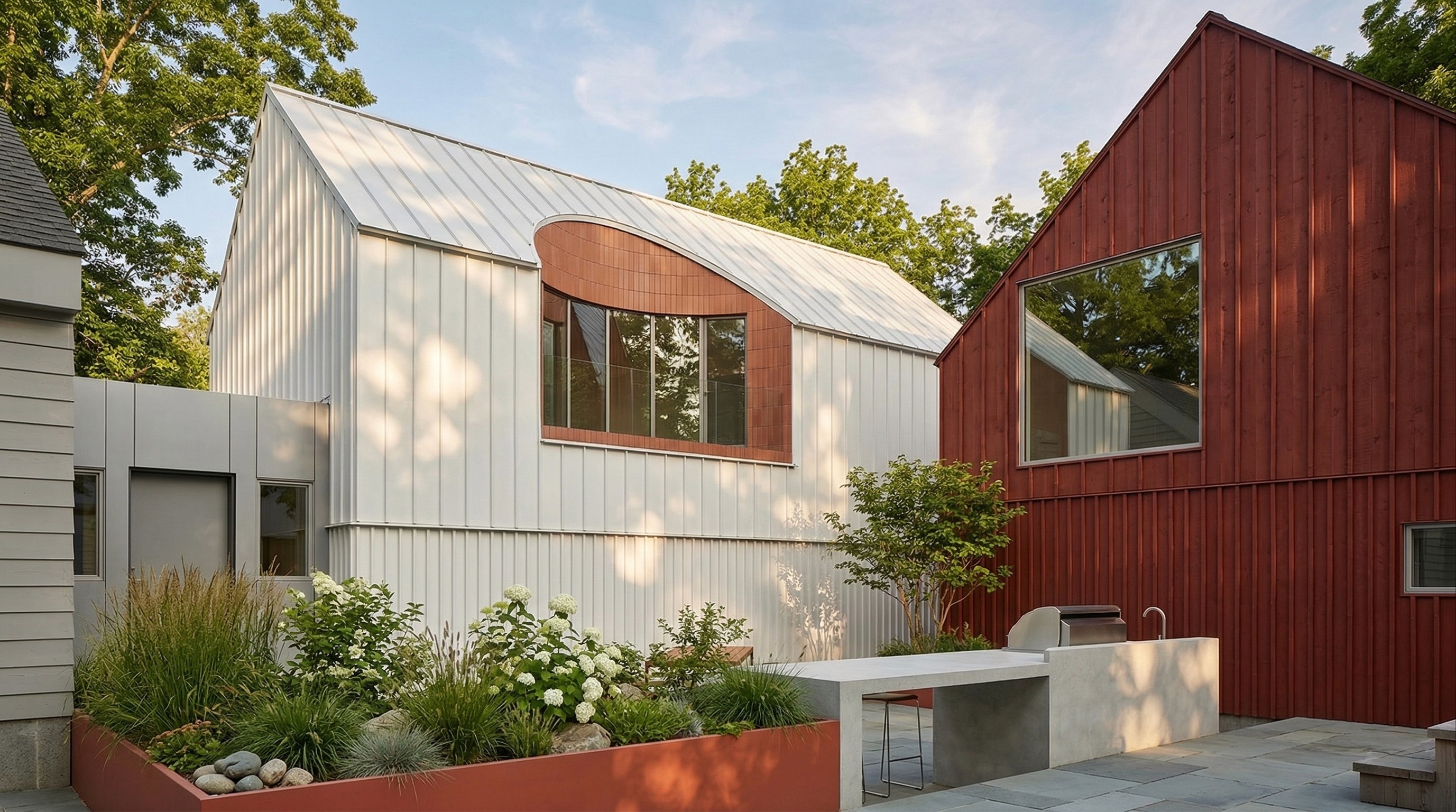
Jen came to Haven with a life that was expanding in every direction. Her mother was moving in from out of state. Her partner’s children were becoming a permanent part of the household. The existing ranch-style home in Westport had served her well, but it couldn’t hold the shape of this new, larger family.
The brief became about creating a living scenario where three generations could thrive together, each with their own space, their own routines, and a shared place to come together.
The property itself was a typical suburban lot: the house sat in the middle, and the yard was configured as something to look at, not to be used. Jen’s biggest frustration was the lack of any real outdoor space for gathering. That frustration became the seed for the entire project.
The challenge
Multi-generational living is one of the oldest forms of dwelling, but American suburban neighborhoods rarely accommodate it well. The typical approach, converting a basement or adding a bedroom, treats the additional family member as an afterthought. Jen wanted genuine independence for her mother, a sense of ownership for the kids, and a shared space where the whole family could come together without anyone feeling like a guest in someone else’s home.
The proportions were tight. We needed to fit an accessory dwelling unit for Jen’s mother, an addition for the children’s wing, and an outdoor gathering space, all without overwhelming the lot or the neighborhood’s character. Westport’s ADU regulations also capped the unit’s floor area, which meant every square foot of the new construction had to work harder.
The design response
Rather than treating the ADU and addition as separate projects appended to the house, we organized all three structures around a shared outdoor room. The existing home, the new ADU, and the kid’s wing form a compound around a central courtyard that holds a pool, hot tub, grill area, firepit, and dining space. This courtyard is the heart of the project, the space Jen never had.
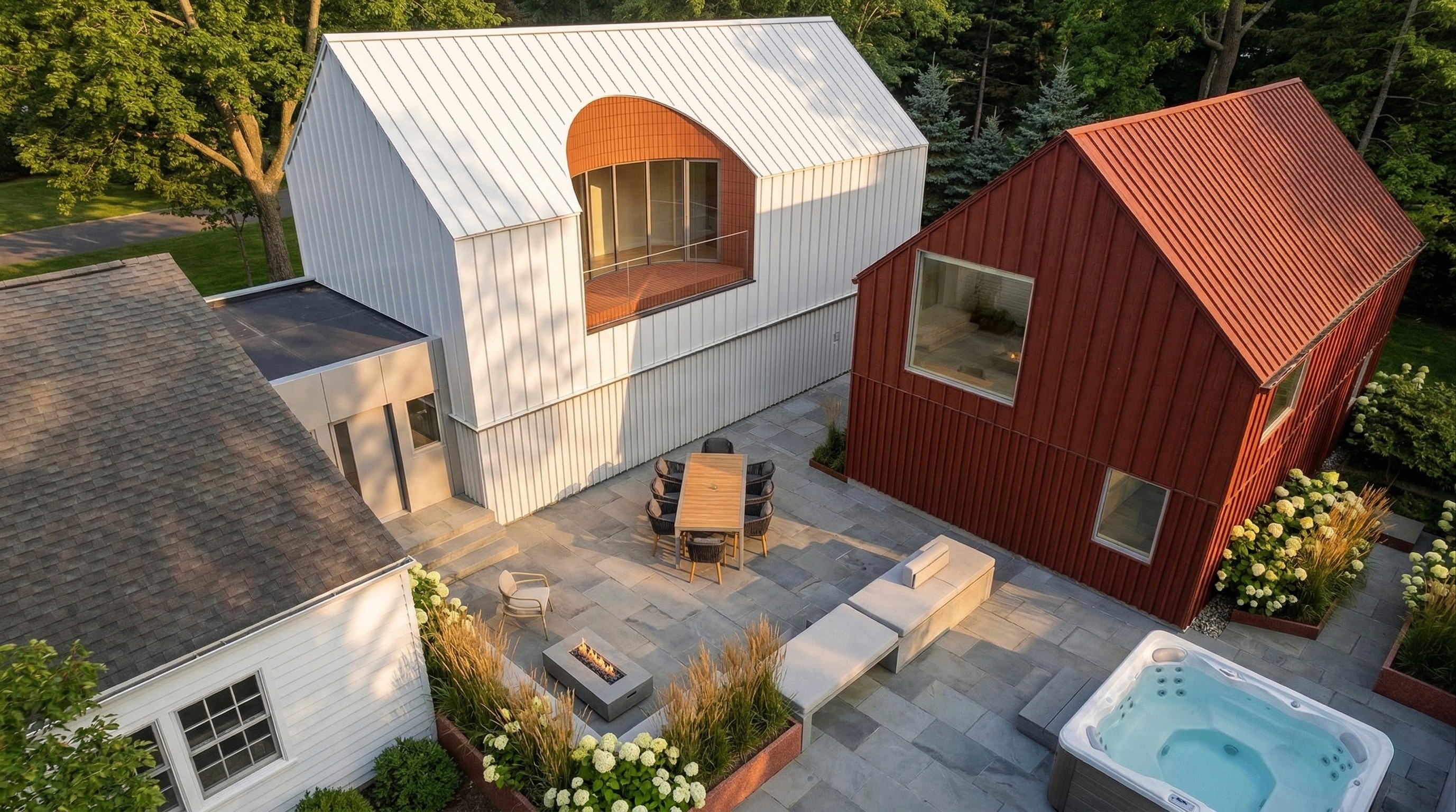
The courtyard: where white metal meets red-stained wood, and the family meets each other.
Each structure sits at arm’s length from the others. Close enough that Jen’s mother can watch her grandchildren play from her kitchen window. Far enough that everyone has their own front door, their own threshold, their own quiet. The separation is deliberate. Independence here is a site plan decision as much as a floor plan one.
The material palette draws from the agricultural vernacular of the Connecticut coast. The ADU is clad in red-stained vertical wood paneling, reminiscent of the barns and outbuildings that once dotted this region. The kid’s wing wears white standing-seam metal, a contemporary reading of the same agricultural language. Between them, a mudroom segment clad in aluminum panels with a flat roof signals the transition from one world to another.
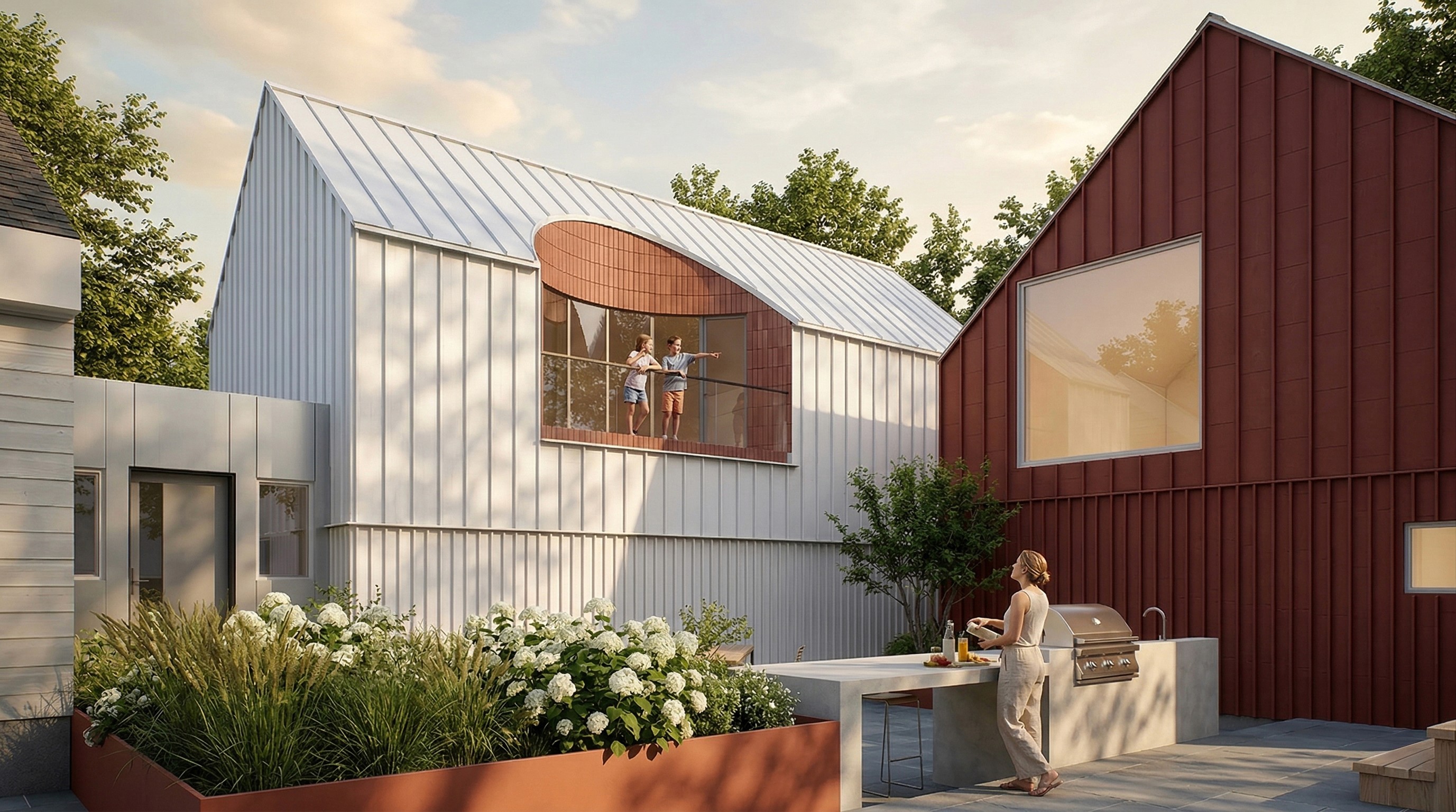
The kid’s wing from the street: a contemporary barn form with arched windows that echo the region’s agricultural past.
Mom’s ADU
One of the biggest concerns for Jen’s mom was that the ADU would feel too small compared to what she was used to. The floor area was limited by Westport’s town regulations, so the design had to find space in other dimensions. We maximized ceiling height and created a sculptural double-height living room to give the unit the sense of grandeur she was after.
The result is a complete, dignified home with its own entrance, its own kitchen, and its own character. The double-height living space features sculptural white plaster walls with curved ceiling transitions that soften every corner. Clerestory windows are punched into the upper walls, each one calibrated to catch light at a different time of day. Morning light washes the kitchen in warmth, afternoon sun pools on the living room floor, and evening brings a soft glow through the garden-facing window.
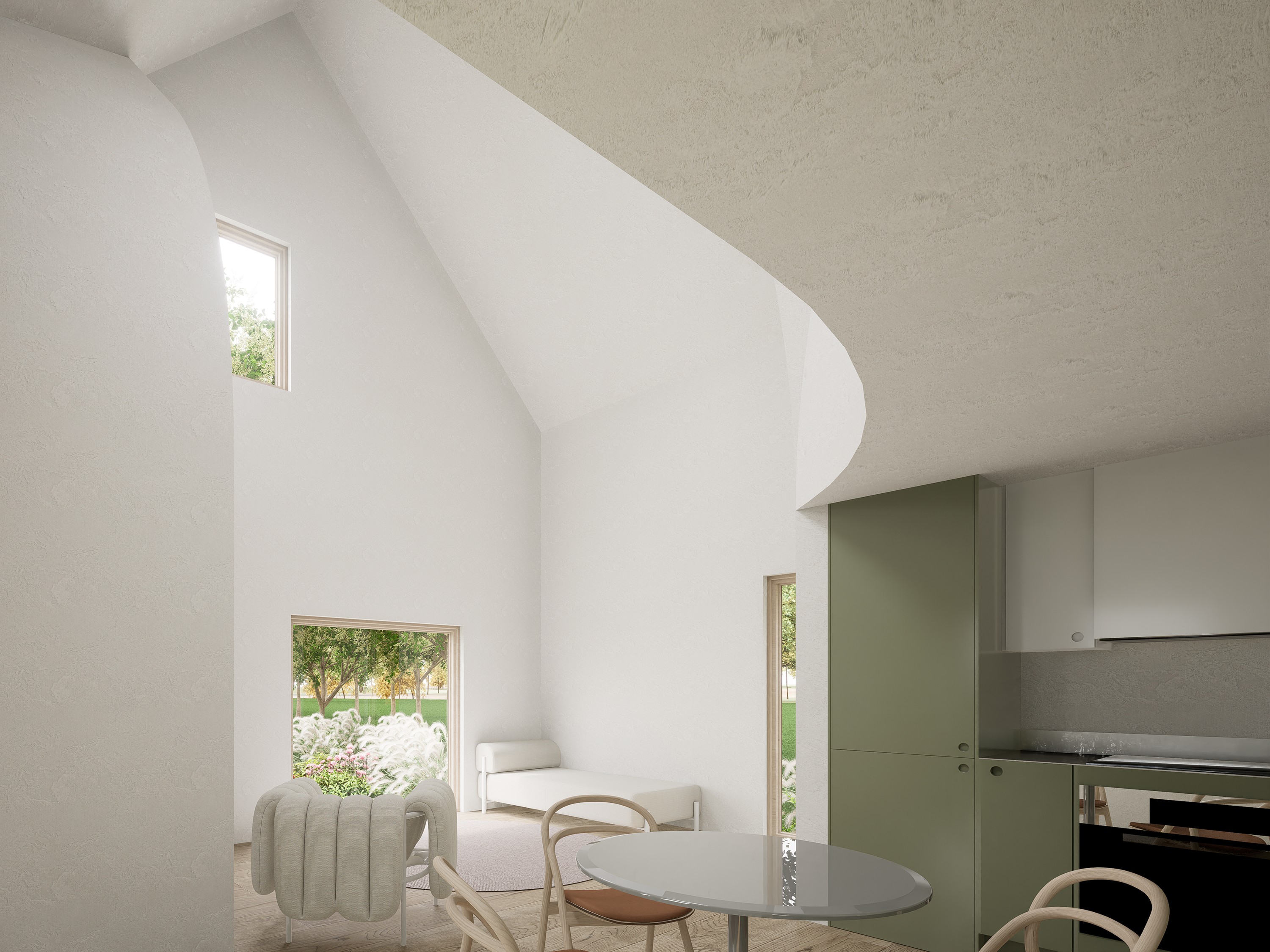
The ADU interior: sculptural plaster volumes, sage-green kitchen cabinetry, and garden views through the full-height window.
The material choices are warm and restrained: sage-green flat-panel cabinetry in the kitchen, a grey-beige stone countertop with subtle veining, and light oak hardwood floors throughout. The curved plaster wall enclosing the staircase is the room’s defining feature, a smooth drum that catches light along its surface and gives the open plan its spatial rhythm.
The kid’s wing
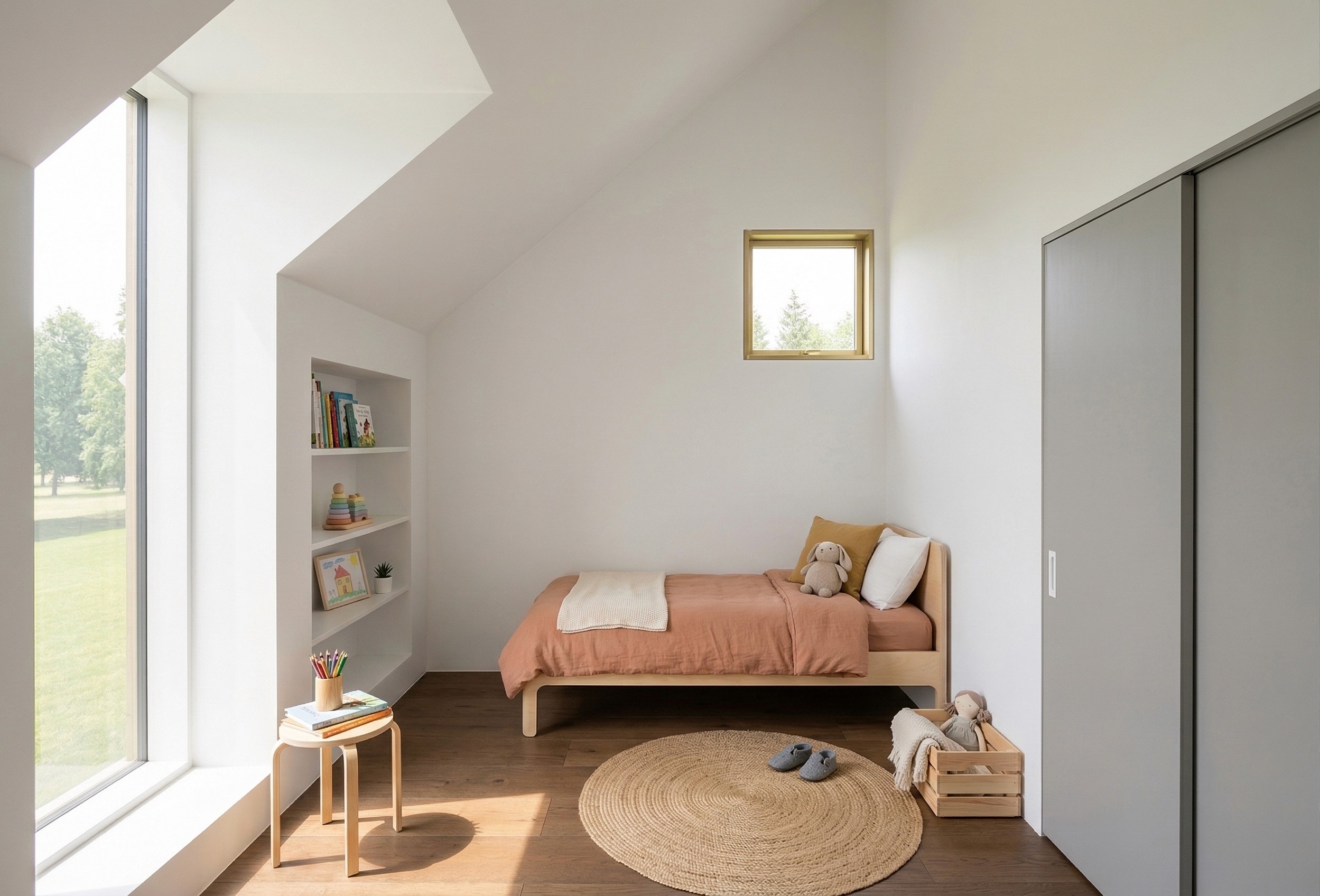
The children’s addition was designed for the long view. Kids grow, and their needs change. The wing needed to feel like theirs, a place where young people could begin to develop their own sense of home.
A sculptural staircase in the mudroom connects the ground floor to the kid’s wing upstairs, marking the threshold between the shared family spaces and their private world.
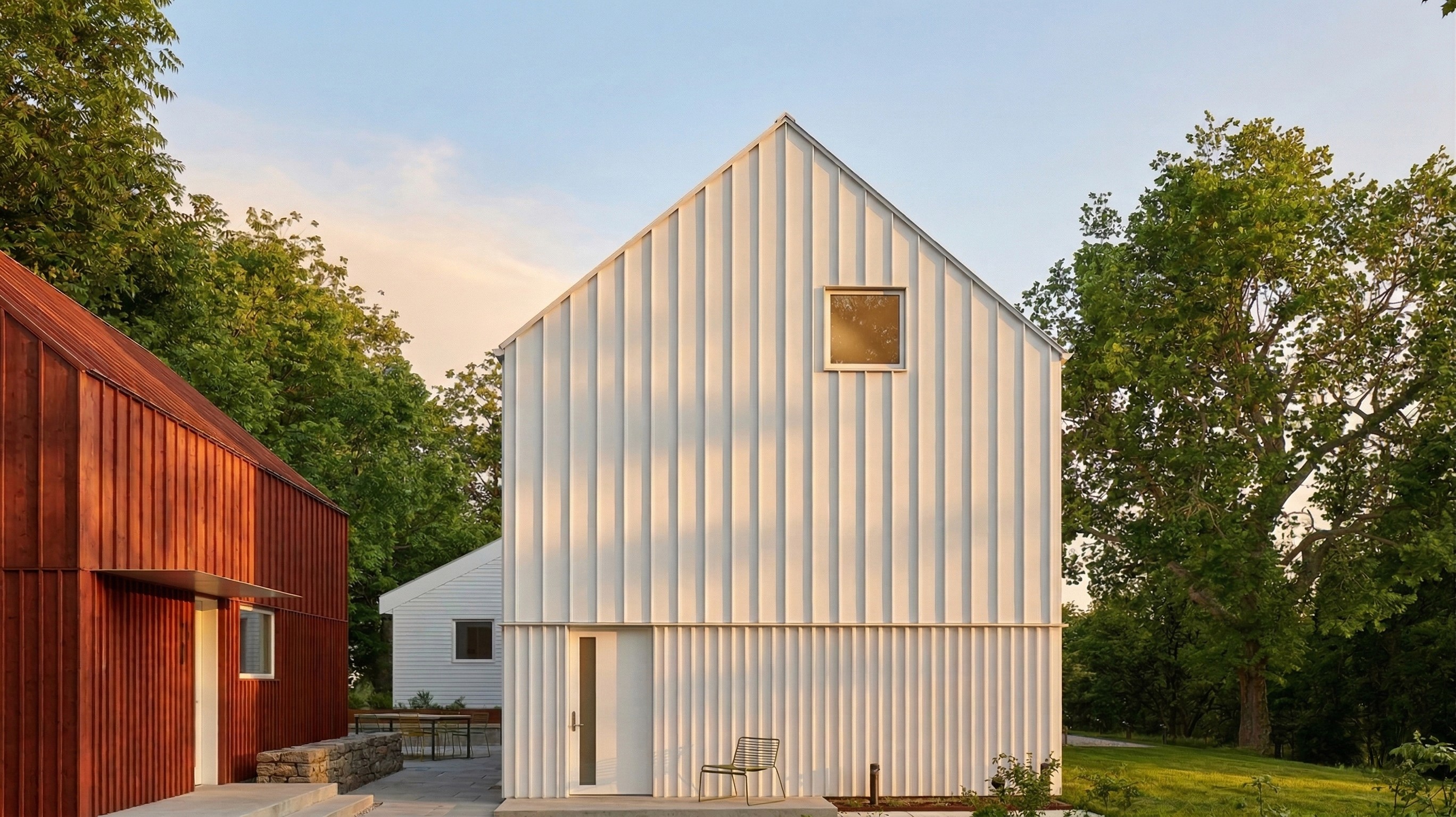
The kid’s wing: a clean barn silhouette in white standing-seam metal, grounded by a single square window.
The wing features a balcony lined with terracotta tile, a visual thread connecting it to Jen’s mom’s ADU across the courtyard. From this balcony, the kids can see their grandmother’s home. She can see them from her kitchen. That sightline is designed into the compound’s geometry, the architecture holding the family together across the distance that gives each member their privacy.
The two arched windows on the upper floor are the wing’s signature detail. Warm wood reveals frame views of the sky and trees, bringing the proportions of agricultural architecture, hayloft doors, barn openings, into a contemporary residential context. The windows sit flush in the facade, arch-topped openings that read as voids punched into the white metal surface.
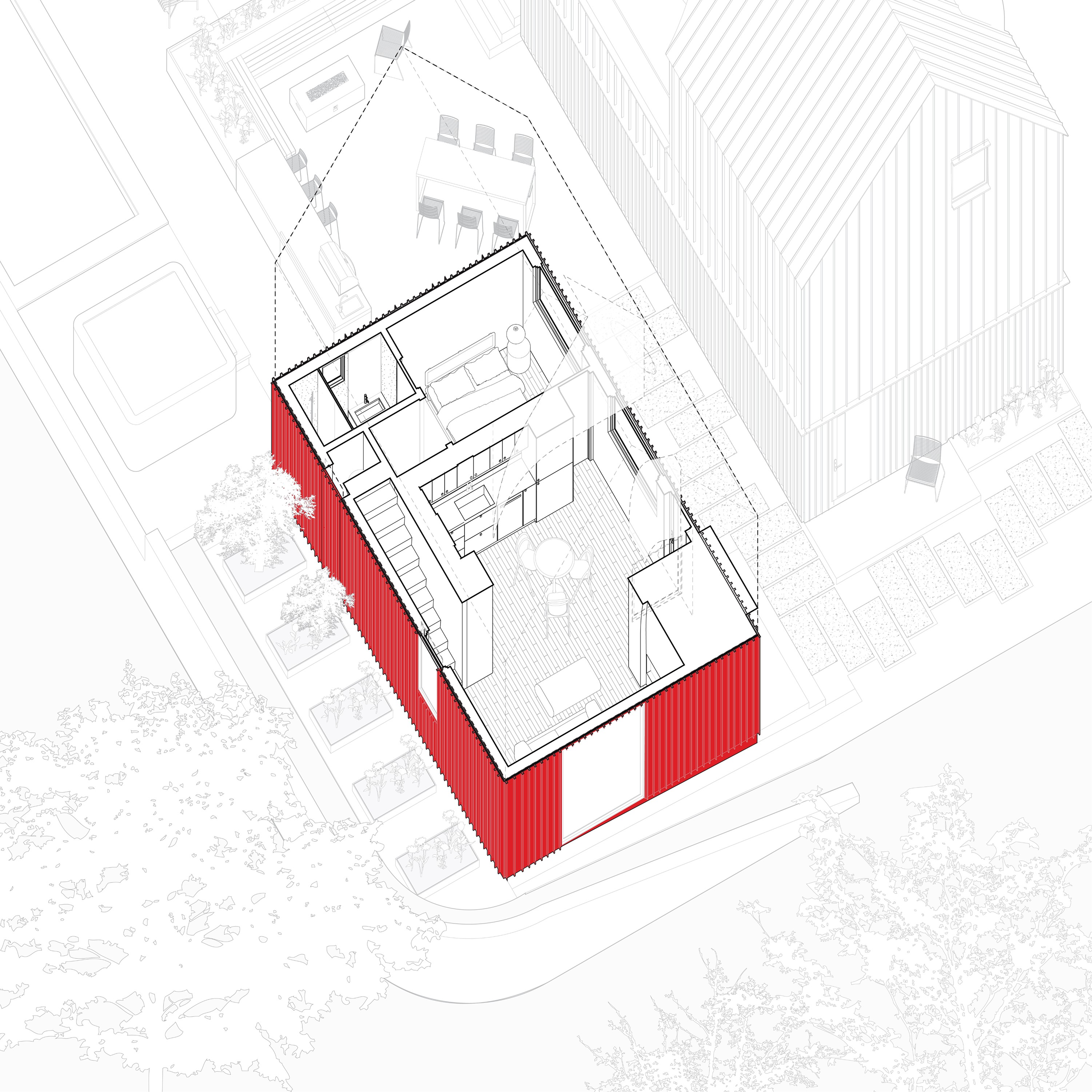
Detached Accessory Dwelling Unit
The outdoor living room
The courtyard was the catalyst for the entire project. Where Jen once saw a suburban backyard with no sense of purpose, we saw the opportunity to create a true outdoor room, a space defined by the three structures around it rather than by walls.
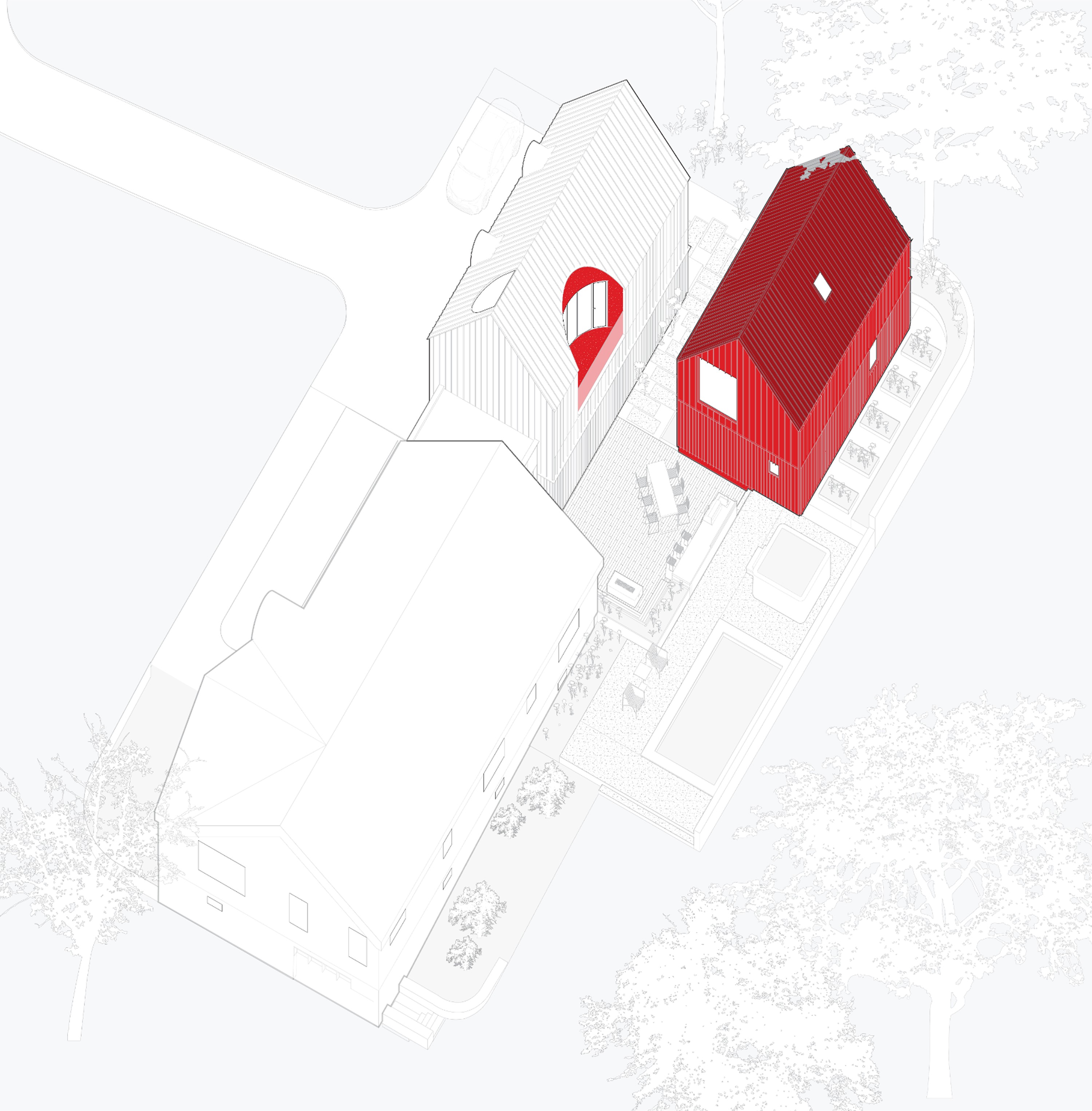
The courtyard in use: three generations sharing the outdoor living room at the center of the compound.
A pool and hot tub anchor one end. A grill area and outdoor dining table occupy another. A firepit creates a gathering point at the third. The terracotta planter wall that runs along one side is both a practical element and a material bridge between the ADU’s red cladding and the courtyard’s ground plane of blue-grey stone pavers.
The triangulated structures create shelter from the wind, and the material warmth of the red-stained wood keeps the space from feeling exposed. It’s a place that works year-round, a space where three generations can be together on their own terms.
The kid’s wing at golden hour: white standing-seam metal catching warm summer light.
Three generations, one address
Jen’s family lives across three structures now, each one designed for the people inside it. Her mother has a home that feels generous despite its regulated footprint. The kids have a wing they’re growing into. And at the center, the courtyard gives them all a reason to step outside and find each other.
The distances between structures matter as much as the rooms within them. Privacy comes from separation, and togetherness comes from the shared ground between. River Oaks Road is a compound where three generations live independently, see each other daily, and gather in a space that belongs to all of them.
“The courtyard is the space Jen never had, and now it’s the reason everyone comes outside.”
Why multi-generational ADUs? Across the U.S., multi-generational households are the fastest-growing household type. But most homes aren’t designed for it. An ADU gives aging parents genuine independence, their own entrance, kitchen, and daily rhythm, while keeping the family close enough to share meals, childcare, and everyday life. |