
CT
A riverside ADU in Norwalk, CT, shaped by the slope, the wetlands, and the view.
Ken and George’s property slopes from the street to the river. Their parents needed a home of their own, close by. Haven designed an ADU that disappears from one side and opens wide to the water on the other.
LOCATION
Norwalk
SQ. FT.
650
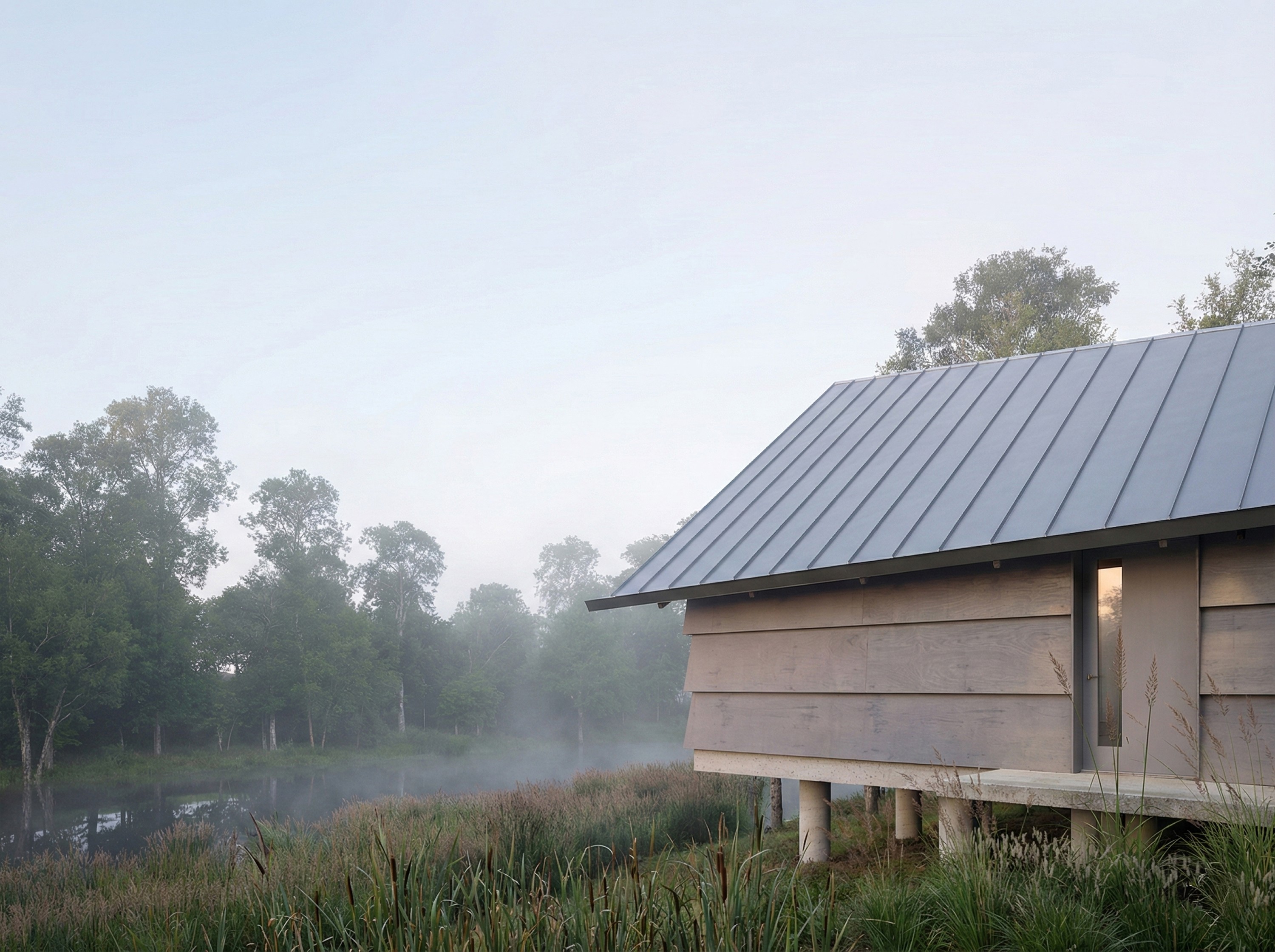
Ken and George live in Norwalk, Connecticut, on a property that slopes from the street down to the Five Mile River. When their parents began needing more day-to-day support, the couple started looking for a way to bring them closer. The main house didn’t have room for a comfortable live-in arrangement, and nearby apartments were either too expensive or too far from the kind of help their parents would need.
They started exploring accessory dwelling units. The idea was simple: build a small, independent home on the same property so their parents could age in place with dignity and privacy, while staying close enough for daily check-ins and shared meals. The lot, though, was anything but simple.
The site
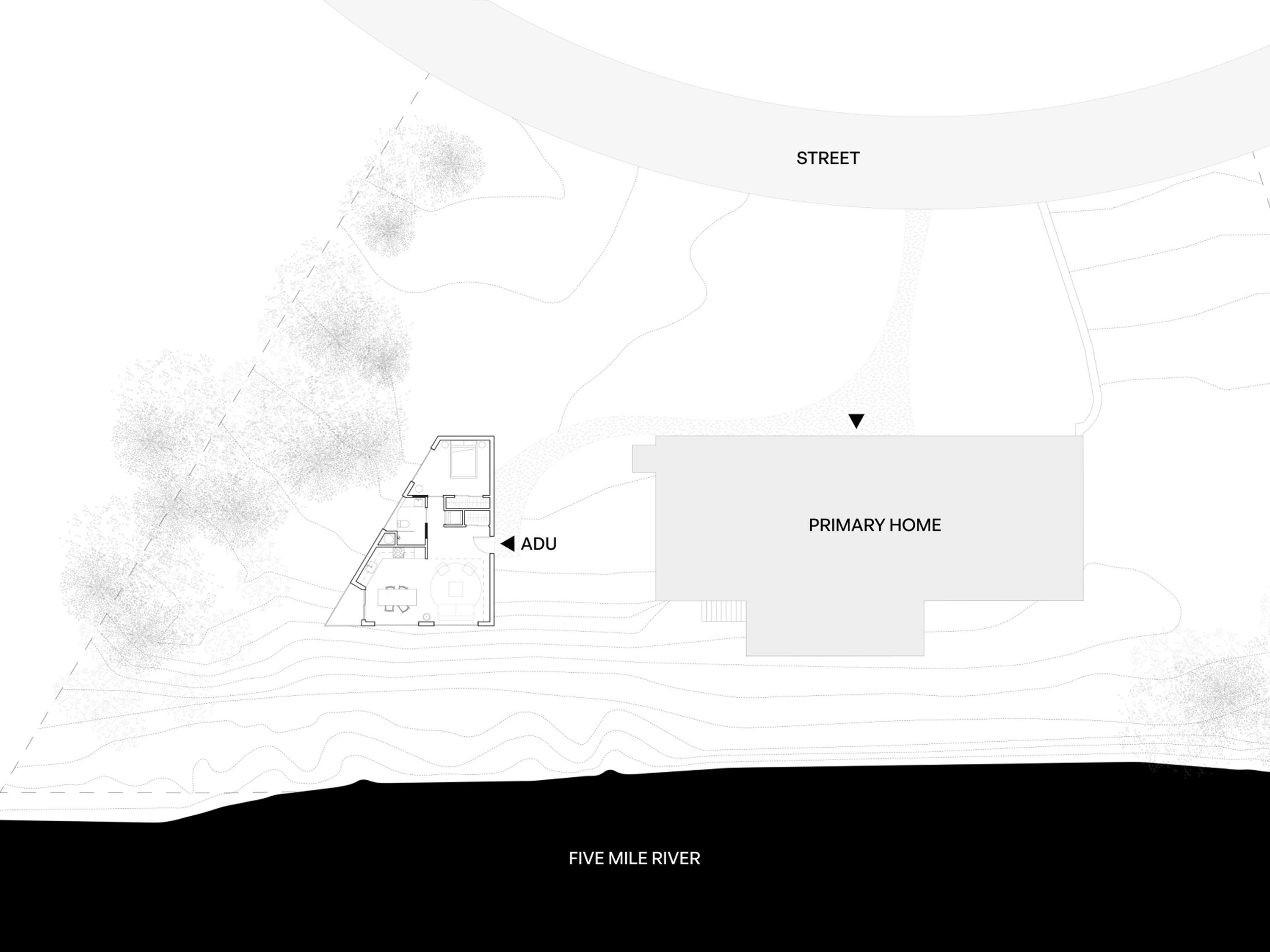
Site plan showing the primary home, the ADU, and the sloping grade down to the Five Mile River.
The property is bounded by a street-side ridge on one end and a wetland-lined riverbank on the other. A steep grade drops from the road to the water’s edge, where seasonal flooding and sensitive riparian zones limited where and how anything could be built. Existing trees along the slope were important to Ken and George, and they wanted as many preserved as possible.
Haven worked with the site rather than against it. The ADU sits on the higher portion of the lot, lifted above the floodplain on concrete piers that minimize ground disturbance. The wedge-shaped footprint follows the contours of the buildable area between the property line, the wetland setback, and the preserved trees.
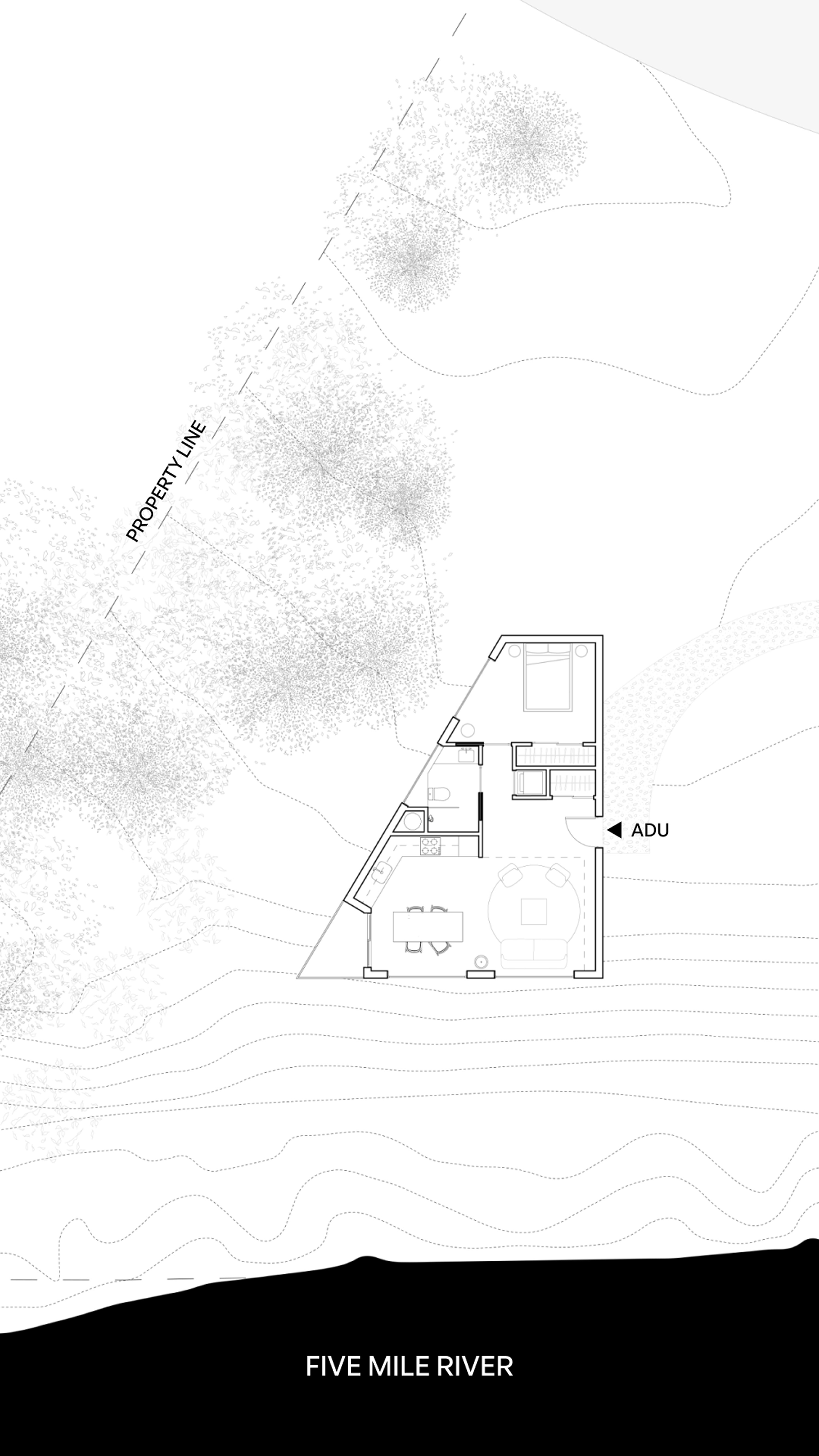
Floor plan: the wedge-shaped layout places private spaces (bedroom, study, bath) at the narrow street-side end and opens to living areas facing the river.
Designed to disappear
Ken and George had one clear request for the design: they wanted the ADU to appear small. From the street, it does. The roofline sits low against the hillside, partially screened by the trees that were kept in place. The structure reads as a modest addition to the property, not a second home.
But the experience changes as you move through the building. The entry is on the uphill side, where ceilings are low and spaces are compact: a bedroom, a study, and a bathroom tucked beneath a tight roofline. As you walk toward the river, the floor follows the slope downward while the ceiling rises. By the time you reach the living area, the space has opened up completely, with high ceilings, an open kitchen, and wide windows framing the Five Mile River.
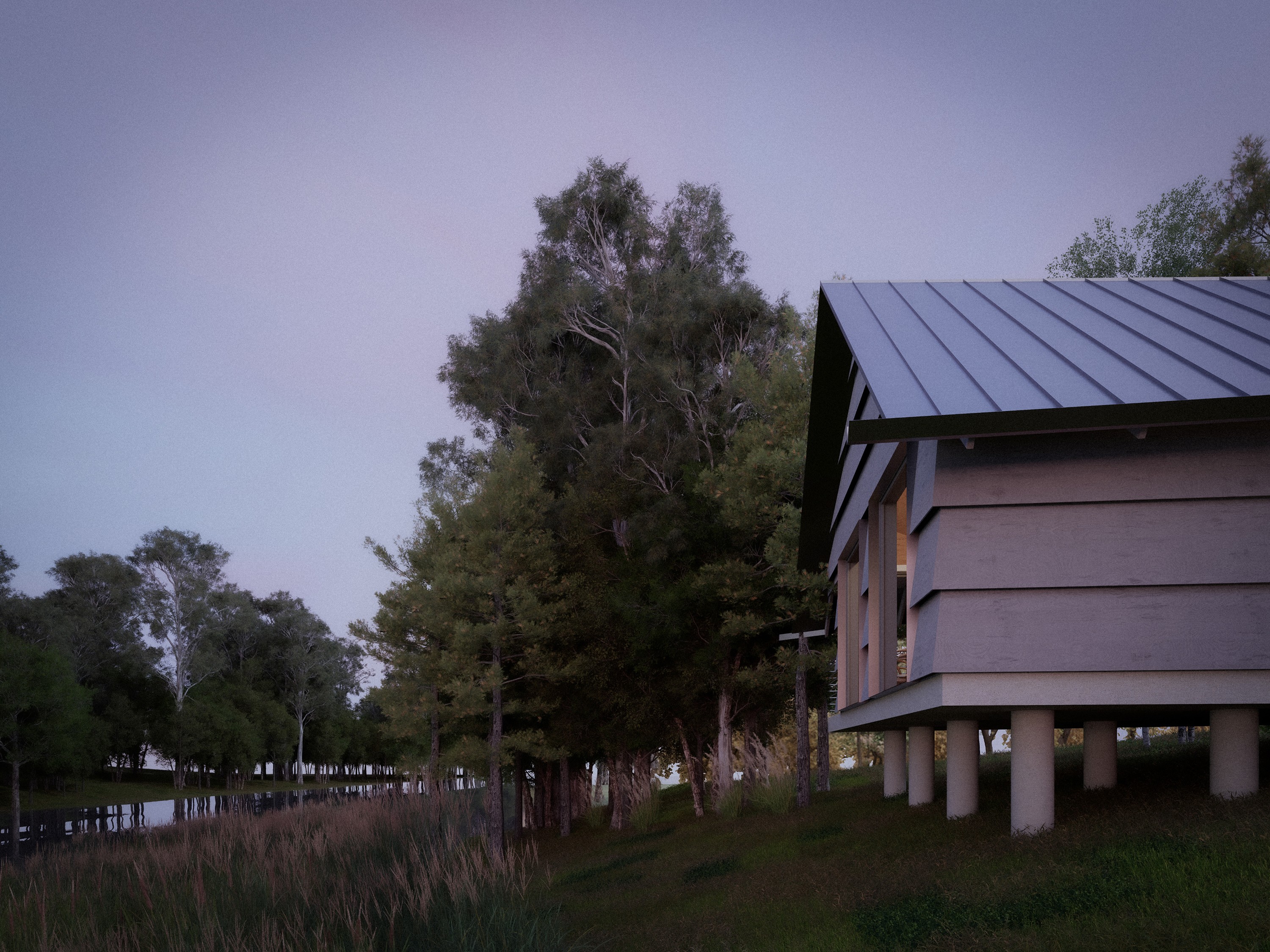
The ADU from the riverbank at dusk. The building is lifted on piers above the floodplain, with the living area glowing through the windows.
Materials
The exterior is clad in horizontal wood siding with a standing-seam metal roof, materials that echo the boat houses and outbuildings found along Connecticut’s rivers. The siding will weather over time, helping the structure blend further into its surroundings. The piers are left exposed, giving the building a light, elevated quality that keeps it visually separate from the ground.
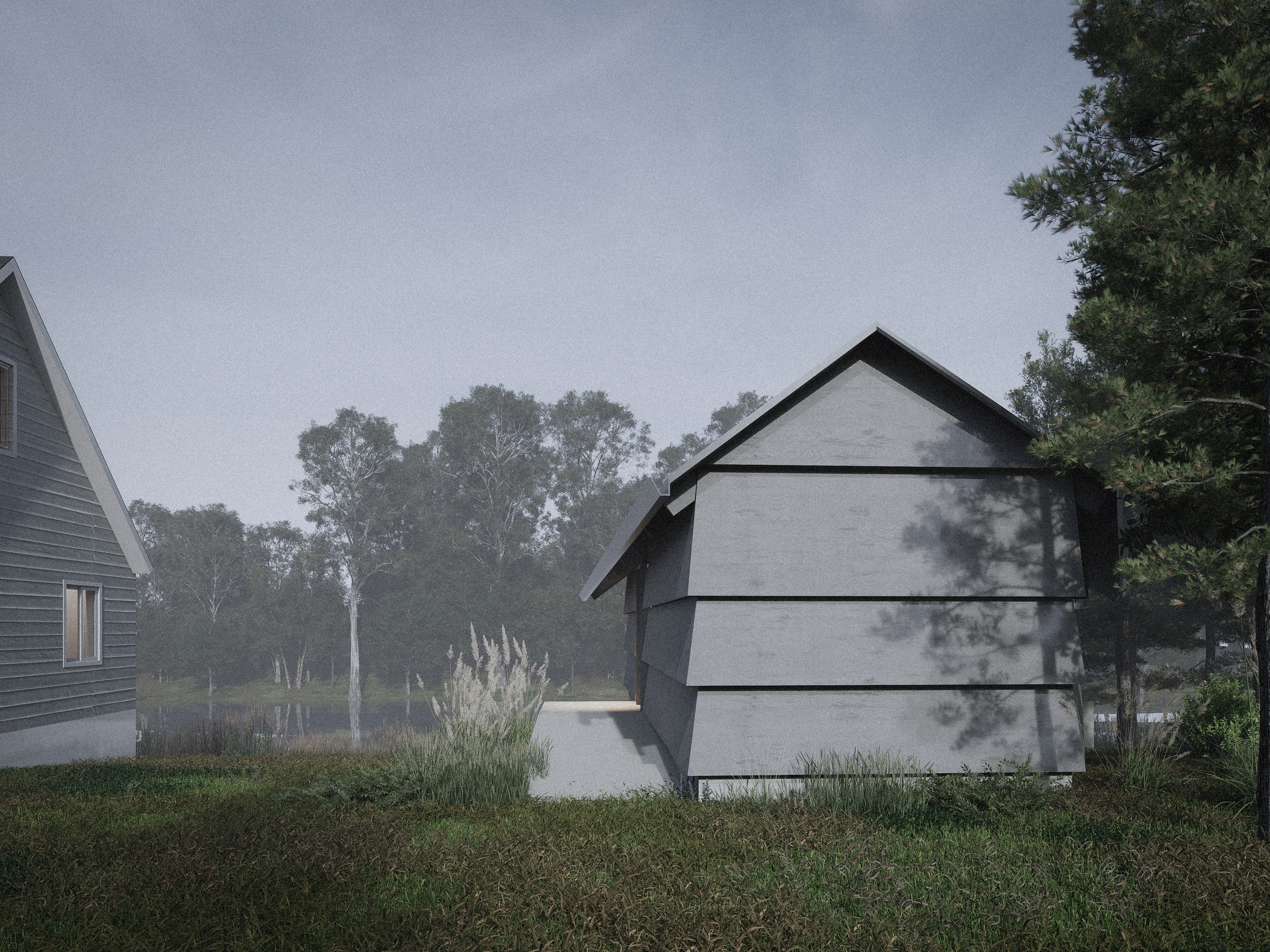
From the street side: the ADU (right) reads as a low, quiet form next to the primary home. Existing trees screen much of the structure from view.
A home for aging in place
At 650 square feet, the ADU is a complete one-bedroom home. The layout is single-story throughout, with no steps between the entry and the living spaces. The bathroom and bedroom are close together at one end, and the open kitchen and living area at the other provide space for hosting or just sitting by the window watching the river.
For Ken and George, the value is in the proximity. Their parents have their own front door, their own kitchen, their own routine. But they’re steps away, on the same property, sharing the same view of the water. It’s the kind of arrangement that lets everyone keep their independence while staying connected.
Early morning on the Five Mile River. The ADU sits quietly at the water’s edge.
SQ. FT. | BEDROOMS | CONFIGURATION |
650 | 1 | Detached, Custom |
Why build an ADU for aging in place?
An accessory dwelling unit allows aging parents to live independently on the same property as their grown children. It’s a practical alternative to assisted living or expensive apartment rentals, offering privacy, proximity, and the comfort of staying close to the people who matter most. In Connecticut, ADU regulations have expanded since 2021, making it easier for homeowners to add a second dwelling to their lot.